




Table of contents
- What is equine therapy?
- How does equine therapy work?
- What are the benefits of equine therapy for mental health?
- Who may benefit from equine therapy?
- What does research say about equine therapy for PTSD and trauma?
- What happens in an equine therapy session?
- What are common concerns about equine therapy?
- How do you find the right equine therapy program?
- How Corner Canyon uses equine therapy
- Frequently asked questions
- Sources
Key takeaways
- Equine therapy uses guided activities with horses, led by a licensed mental health professional, to work on emotions, trust and boundaries; in most mental health programs, you work on the ground and don't ride.
- Equine-assisted approaches have been used for nearly 60 years, and they're usually one part of a wider treatment plan1.
- In an open trial of an eight-session group program, 63 veterans with PTSD had marked drops in PTSD and depression symptoms, and the gains held at three months5.
- A 2024 meta-analysis of 13 studies linked equine-assisted services to lower PTSD scores in veterans, but most studies were small and low quality, so equine therapy works best alongside proven treatments6.
- At Corner Canyon, equine therapy is a weekly, ground-based session for adults in residential and PHP care, with a partner equine therapist at her barn in the Salt Lake Valley; it isn't offered on its own.
Equine therapy is a form of experiential therapy that uses guided interactions between people and horses to support mental health. Equine-assisted approaches have been used for nearly 60 years1, and today they’re part of many mental health programs, often alongside talk therapy and psychiatric care.
You don’t need to know anything about horses to take part. In most mental health programs, you won’t ride at all. Instead, you work with horses on the ground while a licensed therapist helps you notice what comes up and connect it to your life.
This guide explains how equine therapy works, its benefits and limits, what a session looks like and who it may help.
Dominique, an admissions counselor, on taking the first step and letting the team help.
What is equine therapy?
Equine therapy, also called equine-assisted therapy (EAT), equine-assisted psychotherapy or equine-facilitated psychotherapy, involves structured activities with horses guided by a licensed mental health professional, often working with a trained equine specialist. The goals are emotional and relational: understanding your feelings, building trust, setting boundaries and calming your nervous system.
Horses are well suited to this work. They’re large, sensitive herd animals that respond closely to body language, tension and emotion. If you approach a horse anxious or closed off, it may move away or seem unsettled; when you slow down and steady yourself, it often responds differently. That immediate, honest feedback gives you and your therapist something real to explore.
How does equine therapy work?
There are two main ways equine therapy is delivered.
- No riding
- Grooming, feeding, leading, observing
- Focus on emotions and relationships
- No horse experience needed
- Riding plus groundwork
- Needs some balance and fitness
- Adds riding skills and physical goals
- Often used for physical or developmental needs
Ground-based equine therapy
Many mental health programs use only ground-based work. Activities can include:
- Grooming and petting
- Feeding
- Bathing
- Leading the horse, or guiding it through a simple obstacle course
- Observing the herd and how horses interact
- Other individual or group activities
One well-known model, from the Equine Assisted Growth and Learning Association (Eagala), is entirely ground-based and pairs a credentialed mental health professional with an equine specialist in every session2.
Approaches like this are built on the idea that a more authentic interaction develops when both you and the horse are free to move, and that the horse’s reactions can reveal feelings you might not otherwise notice. The therapist’s job is to observe and help you reflect, rather than to direct.
Mounted equine therapy
Other programs combine riding with groundwork. Riding requires learning some horsemanship and needs a degree of balance and physical endurance. A 2022 review of 36 studies found that mounted activities seem to contribute to benefits for many client groups, but it remains unclear whether riding adds anything over and above groundwork alone3.
What they say is what they do.
What are the benefits of equine therapy for mental health?
People describe a range of benefits from working with horses. Research is still catching up, so treat these as reported and observed benefits rather than guaranteed results.
Emotional regulation and stress reduction
Because horses react to tension and calm, they give you immediate feedback about your emotional state. Many people find that simply being near a horse, grooming it or feeding it helps them slow down and settle. Over time, practicing calm with a horse can make it easier to notice and steady your emotions elsewhere.
Self-esteem and confidence
Guiding a large, powerful animal can bring a real sense of accomplishment. Horses don’t judge your past, your diagnosis or how you look, and that acceptance can ease feelings of inadequacy and build self-confidence.
Communication and social skills
Horses respond to nonverbal cues, so you learn quickly how your body language, assertiveness and boundaries come across. In group sessions, working together with horses encourages teamwork, trust and healthy interaction. This can help people who find human relationships hard, including people with social anxiety, PTSD or autistic adults.
Trauma and PTSD
Equine therapy is often used with trauma survivors, including veterans, first responders and survivors of abuse. For people who find it hard to talk about what happened, horses offer a way to work on safety, trust and body awareness without needing to put everything into words.
Trust and healthy relationships
If you’ve experienced betrayal or abandonment, trust can feel risky. Horses need consistent, respectful handling to trust you in return. Building that bond can become a starting point for healthier human relationships.
Mindfulness and present-moment awareness
Horses live in the moment, and working safely with them requires your full attention. Grooming or leading a horse naturally pulls you out of worries about the past or future and into the present.
Grief and loss
For people who are grieving, the bond with a horse can offer comfort and companionship, and a way to process complex feelings without words.
Physical benefits that support mental health
Being outdoors and moving around the barn is gentle exercise. In mounted programs, riding can also improve balance, coordination and core strength, and many riders find the rhythm of the horse’s movement grounding.
Children and teens
Equine programs are also widely used with children and teens, for example to build patience, impulse control and emotional awareness. At Corner Canyon, our programs are for adults 18 and older.
Why is emotional regulation so important?
Emotional regulation is the ability to recognize, understand and manage your emotions in a healthy way. It’s a thread that runs through most of the benefits above. It involves:
- Self-awareness: identifying what you’re feeling
- Self-control: pausing before reacting on impulse
- Flexibility: adapting how you respond to different situations
- Skills: using strategies such as mindfulness, reframing or slow breathing
Good emotional regulation helps you manage stress, avoid impulsive reactions, reduce anxiety, make clearer decisions and get along better with others. Learning it in the moment, with a horse responding to you, can make the skill feel concrete rather than abstract.
My experience at Corner Canyon to put it simply, was life changing. The program gave me a structure to set a solid foundation for my life outside of treatment.
 Live-in care · Draper, UtahResidential treatmentSmall, home-style houses in Draper, with therapy twice a week, daily groups and a stay set by your clinical team.
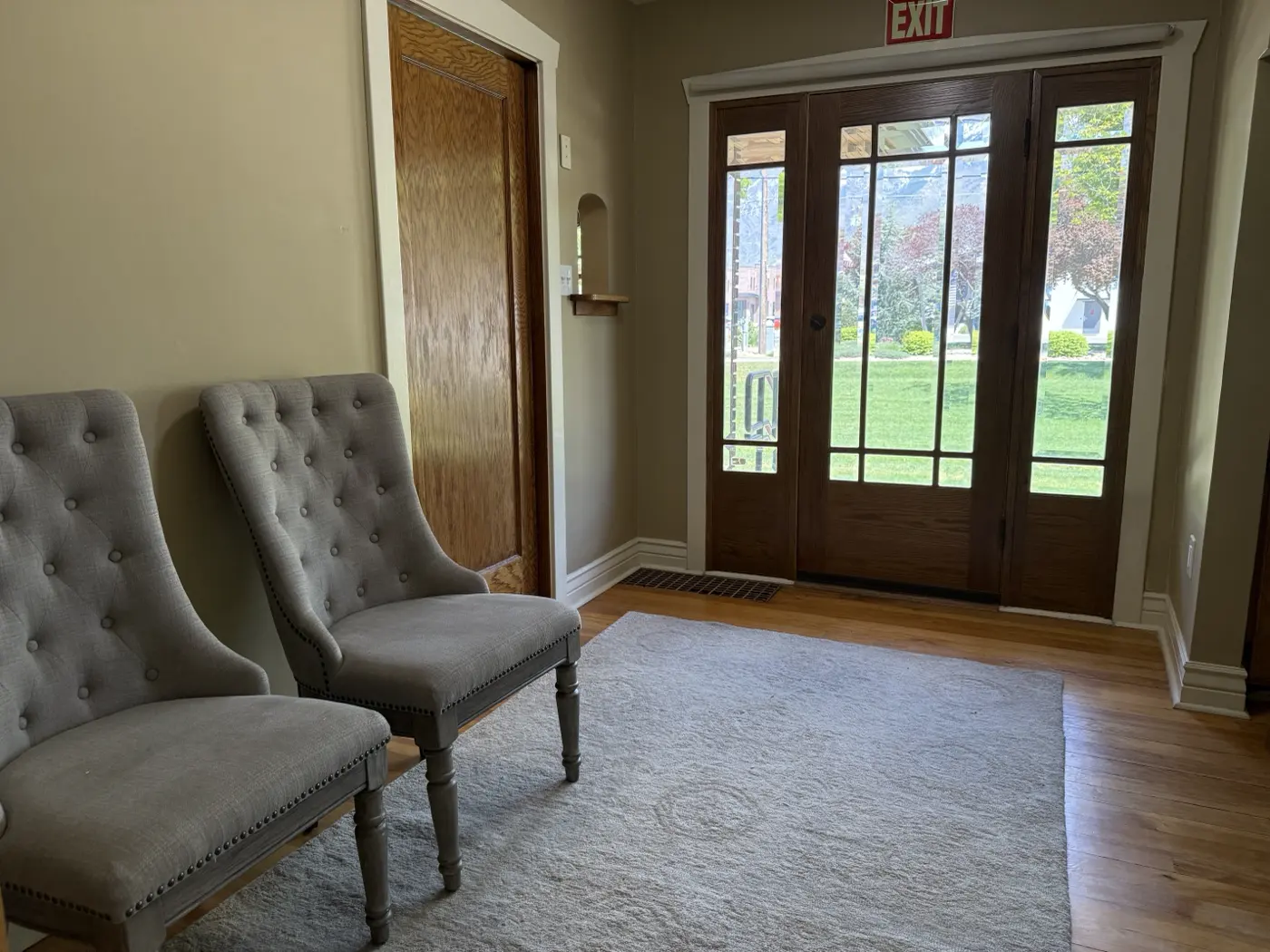 Day program · Pioneer Road, DraperPartial hospitalization (PHP)Monday to Friday, about 9:30 a.m. to 3 p.m., with individual therapy every week.
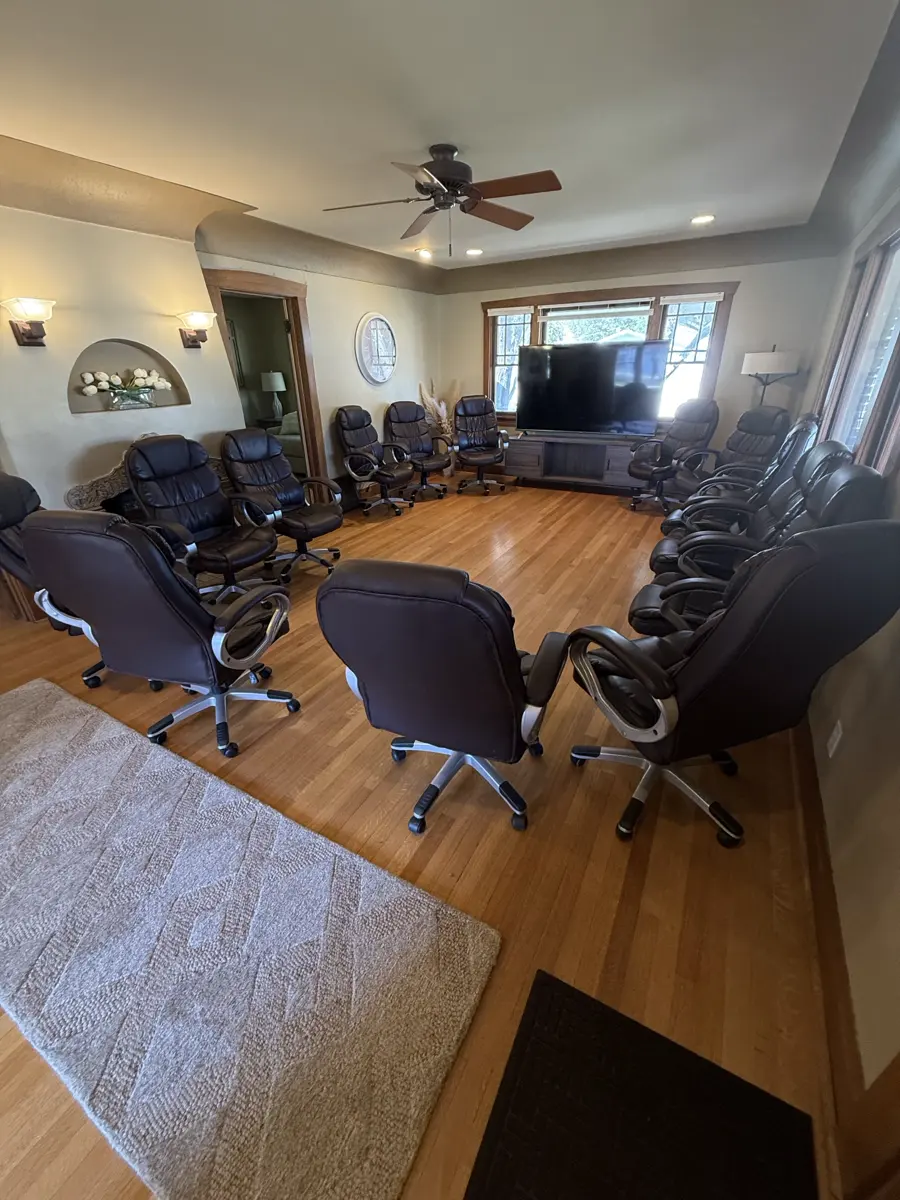 Outpatient · Pioneer Road, DraperIntensive outpatient (IOP)9:30 a.m. to 12:30 p.m., three or five days a week, in person.
 Trauma therapy · All levels of careEMDR therapyEMDR-trained therapists, in individual sessions alongside IFS and DBT skills.
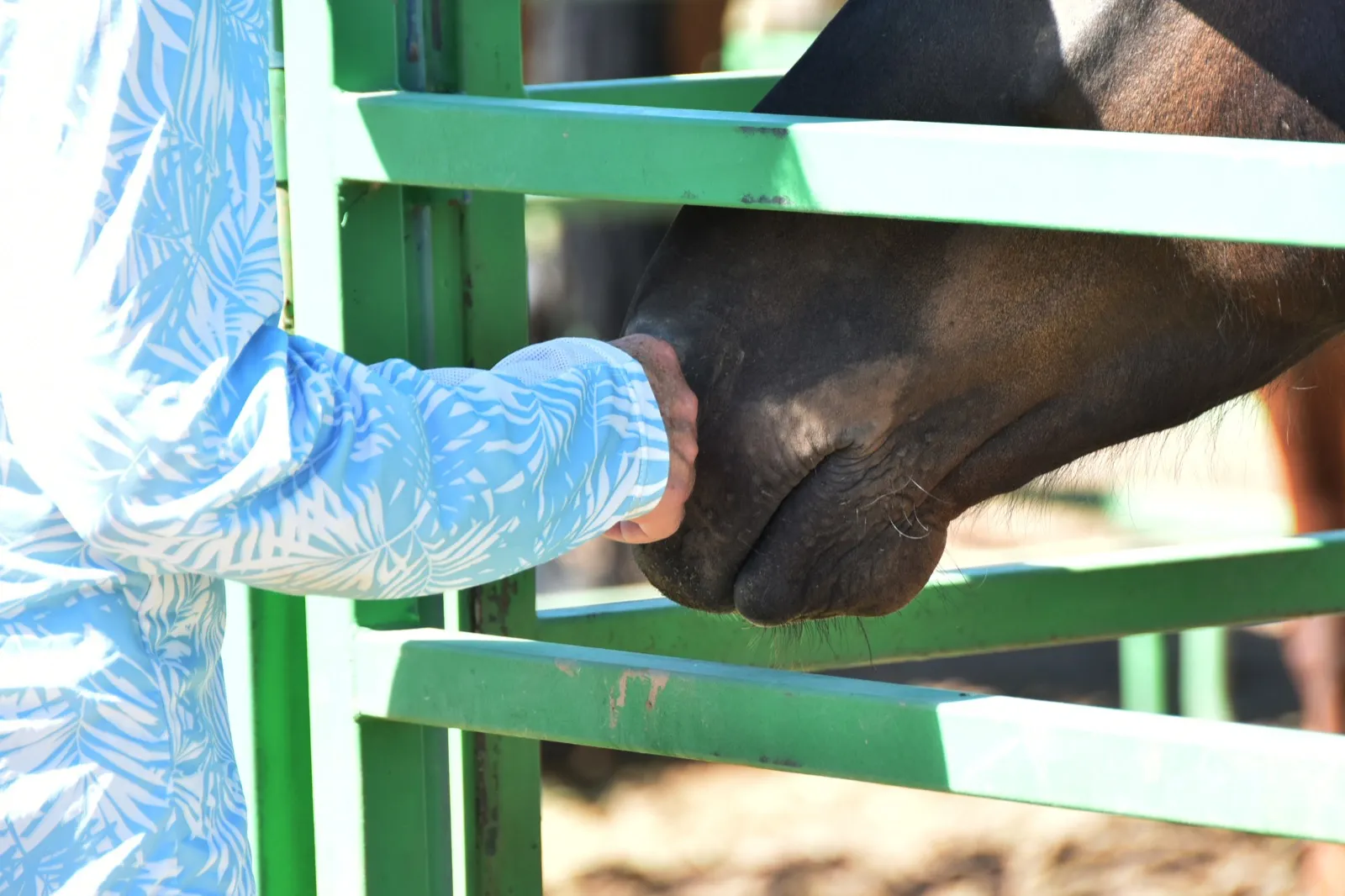 Experiential · Salt Lake ValleyEquine therapyWeekly ground-based sessions with a partner equine therapist, for residential and PHP clients.
 Whole-person care · Our Draper homesHolistic nutritionChefs cook on site seven days a week, with a garden group and a weekly cooking class.
Who may benefit from equine therapy?
Equine therapy can be a helpful part of treatment for people living with:
- Anxiety, depression, PTSD or trauma
- Substance use, alongside mental health care
- The effects of abuse or domestic violence
- Military, combat or first responder trauma
- Grief, divorce or other major life changes
- Difficulty with trust, boundaries or relationships
People with eating disorders, ADHD or autism also take part in equine programs in many settings. Whatever the reason, equine therapy works best as one part of a full treatment plan, not as a stand-alone treatment for a serious mental health condition.
What does research say about equine therapy for PTSD and trauma?
The research is promising but early.
Complex trauma
A treatment model called Equine Facilitated Therapy for Complex Trauma (EFT-CT) builds equine work into an established trauma framework focused on attachment, self-regulation and skill-building4. Its key ingredients include:
- Safety: feeling safe around horses helps people engage and build relationships
- Attachment: building a bond with and tuning in to the horse
- Regulation: body awareness, co-regulating with a calm horse and finding rhythm
- Routines and rituals: predictability and consistency in each session
The authors described the model through three case studies with young people, which showed improvements in trauma symptoms and functioning. Case studies can show promise, but they can’t prove that a treatment works.
Veterans with PTSD
Research with veterans is further along. In an open trial of an eight-session group equine-assisted therapy program, 63 veterans with PTSD saw marked drops in PTSD and depression symptoms, and only 8% left treatment early5. About half showed clinically meaningful improvement, and gains held at a three-month follow-up.
A 2024 review and meta-analysis of 13 studies found that equine-assisted services were linked to significantly lower PTSD scores in veterans, along with benefits such as peer support and bonding6.
However, almost all of the studies were small and of low quality, and the authors caution against firm conclusions. Another review reached a similar view: benefits look real, but larger, more rigorous studies are needed1.
What happens in an equine therapy session?
Sessions vary, but many follow a similar shape.
- Check-in and goalsYou and the therapist talk about what you want to work on, such as anxiety, trust or communication.
- Ground-based activityYou lead, groom or observe a horse, or work through a simple task or obstacle course, alone or with a group.
- The horse as mirrorThe therapist helps you notice how the horse responds to you; a horse moving away, for example, might open a conversation about boundaries.
- DebriefYou reflect on what happened and how it connects to your life and relationships.
- Taking it homeYou name one or two things to practice, such as speaking up or noticing early signs of stress.
Expect experiential learning rather than direct advice. The insights often come from what you notice yourself.
What are common concerns about equine therapy?
It’s normal to have questions before trying it. Common concerns include:
- Safety: horses are large animals. Good programs use calm, well-trained horses, clear safety rules and close supervision.
- Fear of horses: you can start at a distance and move closer only when you’re ready. Working through that fear can itself be part of the therapy.
- “It’s not real therapy”: in a mental health setting, equine therapy is led by a licensed professional with clear clinical goals.
- How well it works: the evidence is encouraging but limited, so it’s best used alongside proven treatments.
- Cost and access: stand-alone programs aren’t always covered by insurance, and barns may be some distance away.
- Allergies or hygiene: let the team know about allergies; you’ll be outdoors and around dust, hay and animals.
- Emotional overwhelm: strong feelings can come up; your therapist will help you pace the work.
- Severe symptoms: if you’re in crisis or need medical stabilization, that comes first.
How do you find the right equine therapy program?
If you’re looking for equine therapy, check that a licensed mental health professional, such as an LCSW, LCMHC or psychologist, leads or co-leads the sessions, and ask about the equine specialist’s training. Some facilitators hold certifications from groups such as Eagala or PATH International. Ask how sessions fit with the rest of your treatment and what safety procedures are in place.
A short tour of one of our residential homes, where clients live, eat and do much of their therapy.
How Corner Canyon uses equine therapy
At Corner Canyon Health Centers, equine therapy in Utah is part of our trauma-focused care for adults. Clients in our residential program and partial hospitalization program (PHP) take part once a week, on Wednesday mornings, in ground-based work with a partner equine therapist at her barn in the Salt Lake Valley. It isn’t offered on its own.
Equine therapy sits alongside individual therapy, EMDR, IFS, DBT skills, groups and psychiatric care, along with other holistic and experiential activities such as yoga and art therapy. If you’re living with trauma and PTSD, anxiety or depression and want to know whether our program fits, our admissions team can help.
Frequently asked questions
What is the difference between equine therapy and therapeutic riding?
Equine therapy for mental health is led by a licensed mental health professional and focuses on emotional and relational goals, often without riding at all. Therapeutic riding teaches riding skills and is mostly used for physical, sensory or developmental goals. Some programs combine the two.
Do you have to ride a horse in equine therapy?
Riding usually isn't required. Many programs, especially those focused on mental health, are entirely ground-based: you groom, lead, feed or simply observe the horses. You don't need any experience with horses, and you can go at your own pace if you're nervous around them.
What mental health conditions can equine therapy help?
It's most often used alongside other treatment for trauma and PTSD, anxiety, depression and relationship difficulties, and in substance use recovery. The research is still early, with mostly small studies, so it works best as one part of a broader treatment plan.
Is equine therapy evidence-based?
The evidence is growing but still limited. Reviews of studies with veterans who have PTSD show lower symptom scores after equine-assisted programs, but most of those studies are small and of low quality. Researchers are calling for larger, controlled trials.
How long is an equine therapy session?
It varies by program, and sessions often run about as long as a standard therapy session or a little longer. Most programs meet weekly, so the benefits build over several sessions rather than one visit.
This article is for general education and doesn’t replace an individual medical or clinical evaluation. Everyone’s situation is different; a conversation with our team is the fastest way to know what applies to you.
If you or someone you care about is in immediate danger, call 911. For a mental health or suicide crisis, call or text 988.