


Equine Therapy in Draper, Utah
Equine therapy for mental health in the Salt Lake Valley, for adults enrolled in our residential and PHP programs. Guided by a therapist and part of our wider range of therapies, this ground-based form of equine, or equestrian, therapy helps you work with anxiety, trauma and depression alongside horses.
Clinically reviewed by Sara Sorenson, LCMHC, Director of Clinical Development
- For adults enrolled in our programs
- Weekly, on Wednesday mornings
- Near Draper, Utah
Call (801) 383-0810
Prefer to call? (801) 383-0810
Thank you, we have your details
Admissions will call you to go over your coverage, usually the same business day. If it’s urgent, call (801) 383-0810.
How Does Equine Therapy Support Trauma Recovery in Utah?
Equine therapy is a form of complementary psychotherapy that works with the interactions between horses and people, and it has been used this way for over 60 years. A therapist and a trained equine specialist help you interact with horses as part of working through mental health conditions.
Equine therapy, or equine-assisted therapy (EAT), is an experiential therapy. There are two main ways it’s done. One combines riding with non-riding activities, which means learning horsemanship skills, balance and some physical endurance. The other, the “Boots on the Ground” approach promoted by EAGALA (the Equine Assisted Growth and Learning Association), involves no riding at all.
In the ground-based approach, you stand alongside untethered horses, on equal footing. The idea is that a more authentic interaction develops when both you and the horse are free to move. According to EAGALA, the therapist and equine specialist are there “to observe and facilitate, not direct” [1]. For the basics, read what is equine therapy.
This approach holds that non-riding interactions create a more open and honest space. Guided by the intuition of the horse and the expertise of a trained therapist, they offer a chance for deep self-reflection: your emotional state is mirrored in the horse’s movements and behavior, which can reveal otherwise hidden insights.
How we do it
Boots on the ground
You stay on the ground, side by side with the horse. The focus is your relationship with it, not riding.
- Grooming and petting
- Feeding
- Bathing
- Leading the horse
- Group activities
You don’t need
- Riding experience
- Horsemanship skills
- A certain fitness level
The other approach
Mounted: riding plus groundwork
Needs horsemanship, balance and stamina. Research is still unclear on whether riding adds benefit [2].
The horse as a mirror
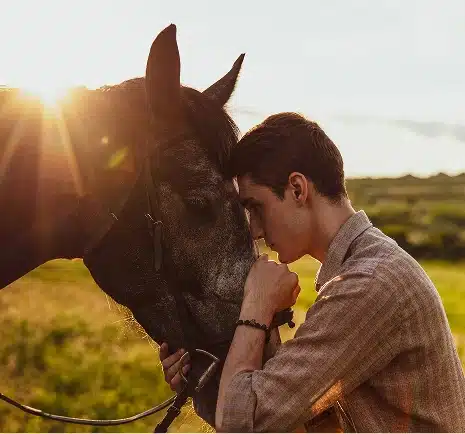
Horses respond to your emotional state, not your words. What they do can reveal insights that are otherwise hard to see, and your therapist helps you make sense of them.
You walk in tense or rushed
The horse moves away or won’t settle
Noticing what your body is carrying
You hold back what you want
The horse doesn’t follow your lead
Practicing clear, calm assertiveness
You slow down and breathe
The horse steps closer and relaxes
Feeling regulation, not just learning it
Why choose Corner Canyon for equestrian therapy in Utah
Utah has many ranches and youth programs. Here, equine work is adult, trauma-informed and part of a full clinical program.
Experiential therapy in the weekly schedule
Equine sessions sit alongside yoga, movement and recreation, as part of experiential and recreational therapy.
Trauma and dissociation specialists
We specialize in trauma. Work with horses focuses on safety, boundaries and body awareness, alongside our trauma and PTSD treatment.
Built for young adults (18+)
Many young adults find it easier to start with a horse than with talk therapy. Our programs are for adults only.
Tied to your treatment goals
Sessions are guided by a therapist and connected to what you’re working on in individual and group therapy.
A home, not a hospital
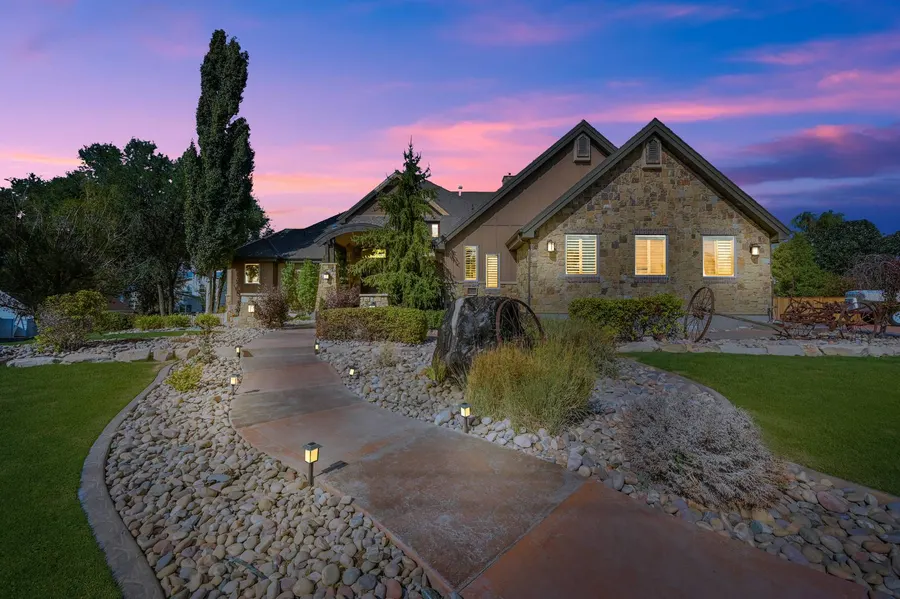
You come back from the barn to a voluntary, unlocked house in Draper, with staff on site around the clock.
One campus for every step
From residential treatment to PHP, with the same team as you step down.
Equine therapy for anxiety
Anxiety lives in the body: a tight chest, shallow breathing, a mind that won’t slow down. Horses are highly sensitive to that tension, and they show it back to you right away.
Grooming, feeding or simply standing near a horse can have a calming effect. As you learn to slow your breathing and soften your body, the horse often relaxes too, so you feel the change rather than just being told about it. Interacting with horses may lower cortisol, the stress hormone, and raise oxytocin, the bonding hormone.
Those moments become skills you practice in groups and individual therapy. Learn more about our anxiety treatment.
Cortisolthe stress hormone, may fall
Oxytocinthe bonding hormone, may rise
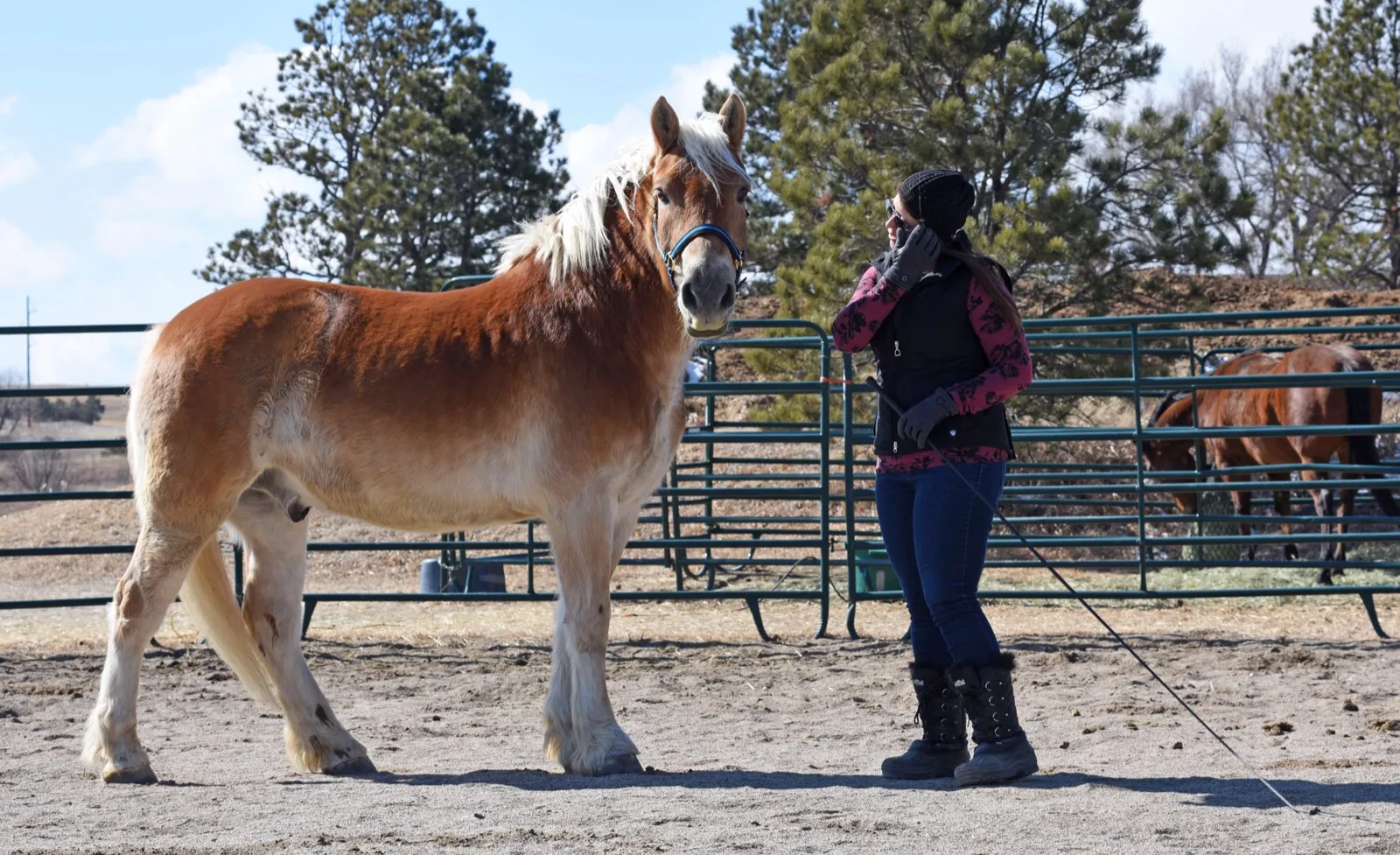
- You arrive tenseTight chest, quick breath, busy mind.
- The horse keeps its distanceIt picks up the tension before you name it.
- You slow your breathYour therapist helps you soften and ground.
- The horse settles beside youYou feel calm change something, in real time.
What Happens During a Horse-Assisted Therapy Session?
Equine therapy promotes emotional healing, personal growth and resilience. Because horses respond authentically to human emotions, they make unique partners in therapy, helping you build life skills in a supportive, non-verbal setting.
Research is still unclear on whether mounted activities add benefit, though some studies suggest they do, and more research is needed [2]. For the ground-based approach there is still little clinical evidence, but extensive experience worldwide points to these possible benefits.
Emotional regulation and stress reduction
Horses are highly sensitive to human emotions and give immediate feedback, which helps you become more aware of your feelings. Merely being near a horse can have a calming effect, and grooming and feeding may ease anxiety and depression. Time with horses may lower cortisol, the stress hormone, and raise oxytocin, the bonding hormone.
Improved self-esteem and confidence
Working with a large, powerful animal can bring a real sense of accomplishment. Guiding or connecting with a horse can build self-confidence and self-efficacy, and its non-judgmental response helps you feel accepted, easing feelings of inadequacy.
Enhanced social and communication skills
Horses respond to non-verbal cues, so you practice body language, assertiveness and boundaries. In group sessions, teamwork, trust and healthy social interaction grow too, which can help people who struggle with relationships, such as those with autism, social anxiety or PTSD.
Trauma healing and PTSD relief
For people who find it hard to talk about their experiences, horses provide a safe space to work with trauma without needing the words first. In programs that include riding, the rhythmic movement is sometimes described as regulating the nervous system, a little like EMDR; sessions here are ground-based.
Development of trust and healthy relationships
If you’ve experienced betrayal or abandonment, the mutual trust a horse requires can help you rebuild relational skills, and that bond can become a basis for healthier human relationships.
Mindfulness and present-moment awareness
Horses live in the moment, and they encourage you to do the same rather than dwell on the past or worry about the future. Grooming or leading a horse takes your full attention, which builds mindfulness.
Coping with grief and loss
For those grieving, the bond with a horse can offer comfort, companionship and unconditional support, and a non-verbal, intuitive way to process complex emotions.
Behavioral and emotional growth in children and teens
Much of the research is with young people: patience, impulse control and emotional awareness in children with ADHD, autism or behavioral challenges, and teens with depression, self-harm or low self-esteem responding to the horse’s non-judgmental nature. Our program is for adults 18 and over.
Physical benefits that support mental health
In programs that include horseback riding, balance, coordination and core strength can improve, and the rhythmic motion can feel meditative and grounding. Here, time outdoors, walking, leading and grooming keeps you moving, which can lift mood.
Equine therapy for trauma and depression
Safety
Feeling safe around the horse builds engagement, attachment and relationship.
Attachment
Building a relationship with the horse and tuning in to it.
Regulation
Body awareness, co-regulation with the horse and rhythm.
Routines and rituals
Safety, predictability and consistency, week after week.
Four building blocks of trauma-focused equine work [3], taken at a pace you can manage.
Equine therapy (therapy with the help of a horse) for complex trauma
One study of equine-facilitated therapy for complex trauma outlined these building blocks [3]. That small study of young people reported:
- A decrease in symptoms associated with trauma
- A decrease in anxiety, depression, somatic/sensory complaints and behavioral dysregulation
- Improved interpersonal skills, communication strategies and overall social functioning
- Improved internal regulation and organization
- Higher-order cognitive functioning (e.g. accessing language, decision making)
- Development of positive coping skills
Results from one small study, not a promise of what will happen for you. Research with veterans with PTSD who took part in a course of equine-assisted therapy also reported improvements in PTSD symptoms and a slight reduction in heart rate [4].
Equine therapy for trauma and PTSD
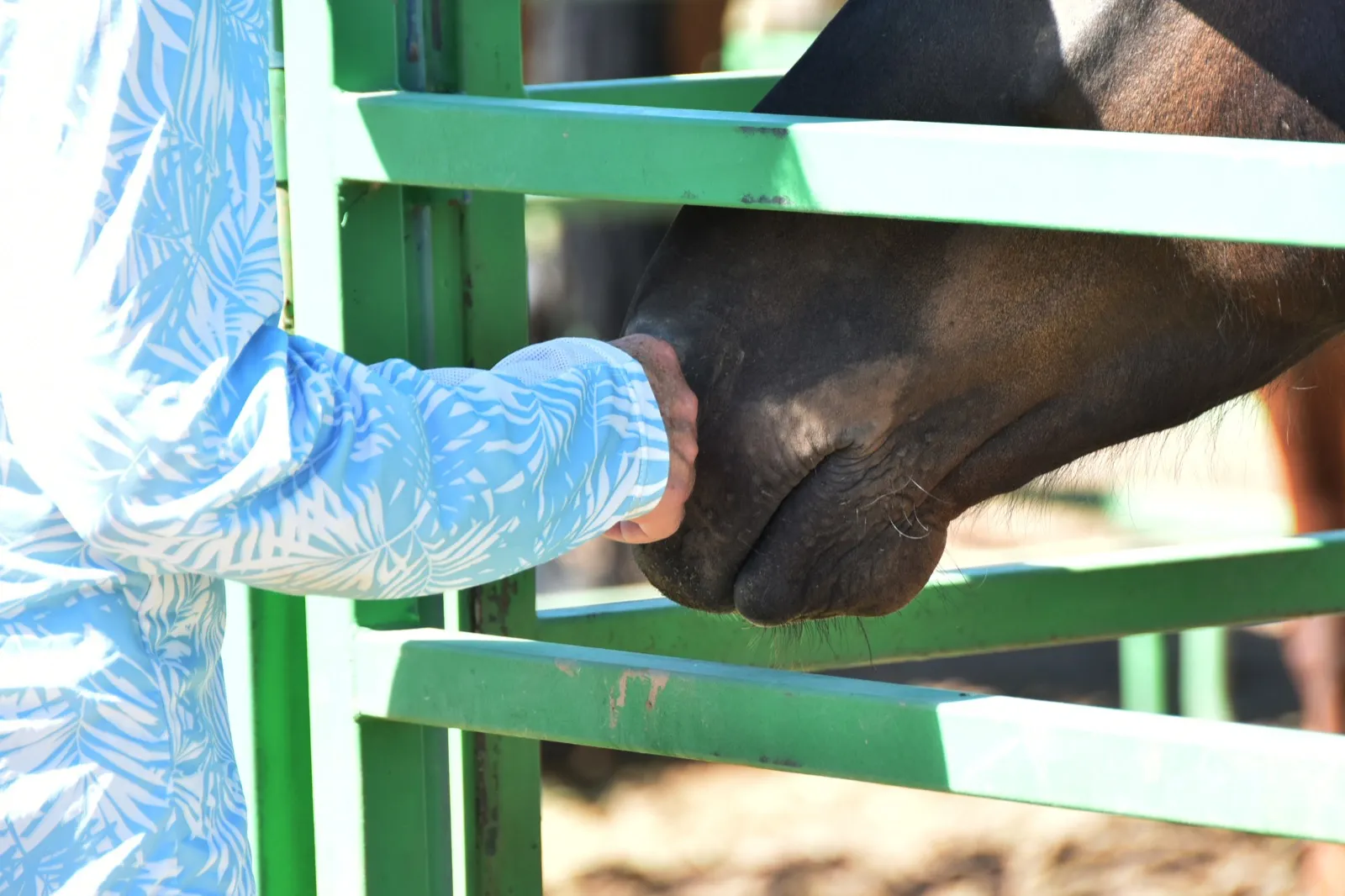
Horses offer a safe way to work with trauma without needing to talk about it first. Practicing boundaries and body awareness with a horse supports the work you do in EMDR, IFS and other therapies in our trauma and PTSD treatment. A 2023 systematic review of ten studies on equine-assisted work with veterans with PTSD found psychological benefits, though most studies were small.
Equine therapy for depression
Depression can make it hard to feel anything or to get moving. Caring for a horse gives a reason to step outside, a sense of accomplishment and a connection that doesn’t ask you to explain yourself. Learn about our depression treatment.
Rebuilding trust
If you’ve experienced betrayal or abandonment, earning a horse’s trust, and learning to trust it back, can be a first step toward healthier human relationships.
Why Is Emotional Regulation Important?
Emotional regulation is the ability to recognize, understand and manage emotions in a healthy way. By managing emotions, you respond thoughtfully instead of reacting destructively, which leads to better communication, resilience and overall well-being. Mastering it supports success in work, love and life.
What it involves
Identifying emotionsSelf-awareness
Controlling impulsive reactionsSelf-control
Adapting to different situationsFlexibility
Using calming strategiesMindfulness, cognitive reframing, deep breathing
How it helps
- Managing stress
- Improving relationships
- Preventing impulsive reactions
- Reducing anxiety
- Making better decisions
What to Expect from Equine Therapy
The EAGALA model is powerful for self-discovery: horses expose hidden emotions, offering a non-judgmental path to healing. Expect deep, experiential learning rather than direct advice [5].
Overview of an equine therapy session
A session typically follows this structure, for 45 to 90 minutes:
- Introduction and goal setting
The therapist talks with you about your goals, such as reducing anxiety or improving communication.
- Ground-based interaction
Leading, grooming or observing the horse, and obstacle or teamwork exercises. No riding.
- The horse as mirror
The horse reacts to your emotions in real time. A horse moving away may reflect a boundary issue.
- Therapeutic debrief
The therapist guides you to reflect on what happened and link it to your own challenges.
- Application to daily life
You take what you noticed back to your groups, individual therapy and relationships.
45–90 min
WeeklyWednesday mornings
Residential and PHPPart of the program schedule
Ground-basedNo riding or experience needed
Adults 18+With a therapist guiding
Horse therapy in Utah, near Draper
Our houses are in Draper, about 20 miles south of Salt Lake City, at the base of the Wasatch Mountains. Equine therapy takes place at Jolene’s Barn in the Salt Lake Valley, with Jolene Green, LCSW, a licensed clinical social worker who practices equine-assisted psychotherapy and natural horsemanship, as part of the weekly schedule.
If you’re searching for equine therapy or horse therapy near you and live in the Salt Lake Valley, Utah County or out of state, admissions can explain how residential and PHP work, including lodging help for PHP.
Who May Benefit from Equine Therapy?
Equine-assisted therapy can help a wide range of adults, especially people who feel stuck in talk therapy or carry trauma in the body.
- Anxiety and depression
- PTSD and trauma
- Survivors of abuse or domestic violence
- Military trauma in veterans and first responders
- Grief, divorce or major life transitions
- Young adults (18+) who find talk therapy hard to start with
Equine therapy is also used for
- Substance misuseHere, co-occurring substance use is treated alongside a primary mental health condition.
- Eating disordersAdmissions can suggest specialized eating disorder programs.
- Children and teens with ADHD, autism or behavioral challengesOur programs are for adults 18 and over.
Common Concerns About Equine Therapy
Equine therapy has a lot to offer, and it’s normal to have reservations. Here’s how we handle the common ones.
Safety and risk of injury
Sessions are on the ground, with the equine therapist there throughout, and you never have to get closer than you want.
Fear of horses
Fear is welcome and often part of the work. You can start by observing from a distance.
Effectiveness compared to traditional therapy
Equine therapy complements your individual and group therapy here. It doesn’t replace them.
Cost and accessibility
It’s part of the weekly schedule for enrolled residential and PHP clients.
Allergies or hygiene issues
Tell admissions about allergies. Your team will plan around them, and you can wear clothes you don’t mind getting dusty.
“It’s not real therapy” stigma
Sessions are guided by a therapist and tied to the goals in your treatment plan.
Emotional overwhelm
Strong feelings can surface. Your therapist paces the work and helps you settle before you leave.
Suitability for severe conditions
Your clinical team decides whether it fits, as one part of a full program with 24-hour support.
Equine Assisted Therapy in Utah: Finding the Right Program
Utah is home to many equine therapy programs, offering support for mental health, trauma, addiction and developmental challenges. When you compare them, look for EAGALA- or PATH International (Professional Association of Therapeutic Horsemanship)-certified facilitators, check whether licensed therapists (LCSW, LMFT) are involved, and ask how the work connects to the rest of your care.
At Corner Canyon, equine therapy is one part of a full adult mental health program, alongside experiential and recreational therapy, individual and group therapy, and psychiatric care.
- Licensed therapists involved
Look for a licensed clinician (such as an LCSW, LMFT or LCMHC) guiding the work, not only a horse handler.
- A recognized model or credential
EAGALA and PATH International train and certify equine-assisted facilitators.
- Part of a wider plan
Equine work tends to mean most when it’s connected to your other therapy and goals.
- Programs for your age
Many Utah programs are for teens or children. Corner Canyon is for adults 18 and over.
Thank you, we have your details
Admissions will call you to go over your coverage, usually the same business day. If it’s urgent, call (801) 383-0810.
Insurance for equine therapy
Equine therapy is part of your residential or PHP program, and the program may be covered by insurance. We work with most PPO plans that include out-of-network benefits, and our team will verify your insurance for free.
PPO plans with out-of-network benefitsUsually covered
Self-payPayment options
Single case agreementsAsk admissions
Read about the cost of treatment and payment options.
Thank you, we have your details
Admissions will call you to go over your coverage, usually the same business day. If it’s urgent, call (801) 383-0810.















In our clients’ words
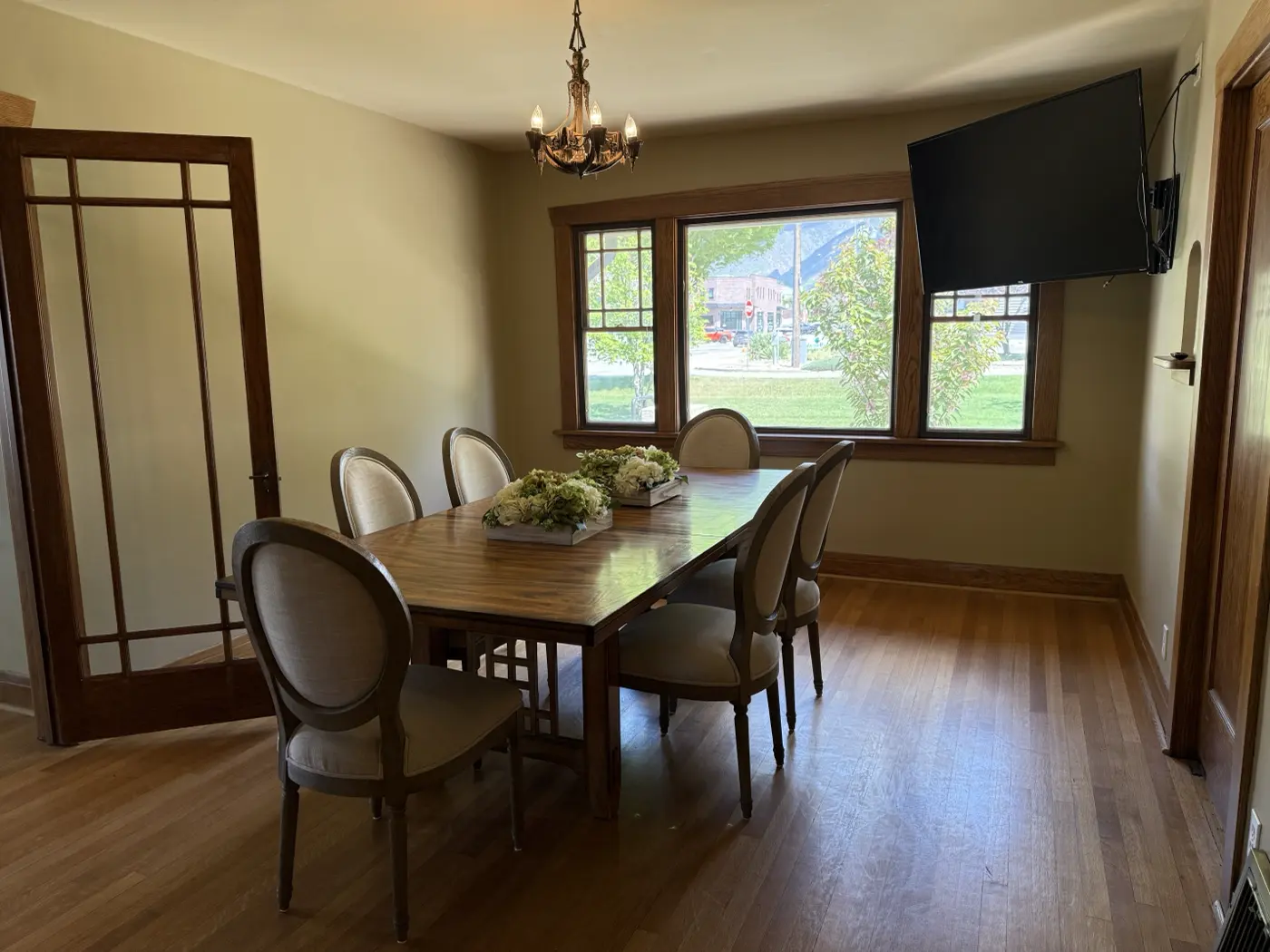
Three mental health facilities in Draper, Utah
Clients come to us from across Utah and the country. Admissions helps you plan your arrival.

Questions about equine therapy
Have another question? Our admissions team takes calls at any hour; after hours, we call you back from 9 a.m. MT.
Call (801) 383-0810Can I come just for equine therapy?
Equine therapy is part of our adult mental health programs, for clients enrolled in residential treatment or PHP. If you’re looking for equine therapy on its own, admissions can point you to a provider.
Do you offer equine therapy for teens or children?
Corner Canyon treats adults 18 and over, and so does our equine therapy.
Do I need riding experience?
You don’t need any. Sessions are ground-based: you groom, feed, lead and spend time with the horses, and there’s no riding.
How often are sessions?
Once a week, on Wednesday mornings, as part of the residential and PHP schedule.
Where are the horses?
At Jolene’s Barn in the Salt Lake Valley, where our partner equine therapist, Jolene Green, LCSW, keeps her horses. Sessions are part of the weekly schedule for enrolled clients.
What is the difference between equine therapy and hippotherapy?
Hippotherapy is a form of physical, occupational or speech therapy that uses a horse’s movement. Equine therapy here supports mental health. Read what is equine therapy.
Is equine therapy evidence-based?
Research is growing but still limited, and much of it comes from small studies. We offer it as one part of a full program, alongside therapies with stronger evidence.
Does insurance cover equine therapy?
It’s part of your residential or PHP program, and the program may be covered by insurance. Our team will verify your insurance for free.
Sources
The research and guidelines cited on this page. Numbers match the references in the text, and links open the original source.
5 sources cited
- 1The Eagala Model (Boots on the Ground). eagala.orgRead the sourceeagala.org
- 22022Mental health benefits of mounted equine-assisted therapies: A scoping reviewRead the sourcedoi.org
- 32018Equine Facilitated Therapy for Complex Trauma (EFT-CT)Read the sourcedoi.org
- 42023Equine-assisted interventions for veterans with posttraumatic stress disorder: a systematic reviewRead the sourcedoi.org
- 5All About Equine Assisted Psychotherapy. psychcentral.comRead the sourcepsychcentral.com
Talk to someone today
Treatment for mental health conditions and trauma is available in Utah. Are you or a loved one looking for a compassionate space to heal from anxiety, trauma, PTSD or other mental health conditions, including co-occurring substance use? Our licensed, trauma-informed therapists and counselors offer a range of therapeutic and holistic approaches. Reach out to our admissions team at any hour; after hours, we call you back from 9 a.m. MT. We’re in a peaceful setting bordered by the Wasatch Mountains.