





Brainspotting Therapy in Draper, Utah
Brainspotting is a trauma therapy that uses where you look to reach how your body holds a painful experience. At Corner Canyon it’s one-on-one, with a trained therapist, inside residential, PHP and IOP care in Draper, Utah.
Clinically reviewed by Sara Sorenson, LCMHC, Director of Clinical Development
- Trauma specialists
- Residential, PHP and IOP
- Draper, Utah
Call (801) 383-0810
Prefer to call? (801) 383-0810
Thank you, we have your details
Admissions will call you to go over your coverage, usually the same business day. If it’s urgent, call (801) 383-0810.
What is brainspotting therapy?
Brainspotting is a therapy for processing trauma and emotional distress by focusing on fixed eye positions. “Where you look affects how you feel” is its core idea.
A therapist guides your eyes across your field of vision until you find a “brainspot”: an eye position linked to a strong reaction in the body when you bring up a painful experience. You then hold your gaze there and notice what comes up. It draws on EMDR and body-based (somatic) approaches, and was developed in 2003 by David Grand, an EMDR therapist who noticed clients getting “stuck” at certain points in their visual field.
The method’s theory is that these eye positions connect to deeper, non-verbal parts of the brain that handle emotion and the body’s stress response, which is why it can reach experiences that are hard to put into words.
Research is still early. In a 2017 study of 76 adults after a traumatic event, PTSD symptoms dropped with both brainspotting and EMDR, with larger effects for EMDR. Brainspotting isn’t yet in the major PTSD treatment guidelines. We use it alongside established therapies, not instead of them.
Finding a brainspot brings together three things:
- Eye positionYour therapist moves a pointer slowly across your field of vision.
- Body responseYou notice where your body reacts most: tightness, heat, a shift in breathing.
- Focused attentionYou hold your gaze on that spot and notice what comes up, sometimes with bilateral sound.
Why choose brainspotting at Corner Canyon
Most brainspotting in Utah is with an outpatient therapist, an hour at a time. Here it’s part of a full trauma program, with support between sessions.
Specialized trauma therapies
Brainspotting alongside EMDR therapy in Utah, ART, IFS, CPT and DBT, so your therapist can choose the method that fits.
Trauma and dissociation specialists
We specialize in complex trauma and dissociation, and brainspotting is one option for people who find talking about trauma hard.
A home, not a hospital
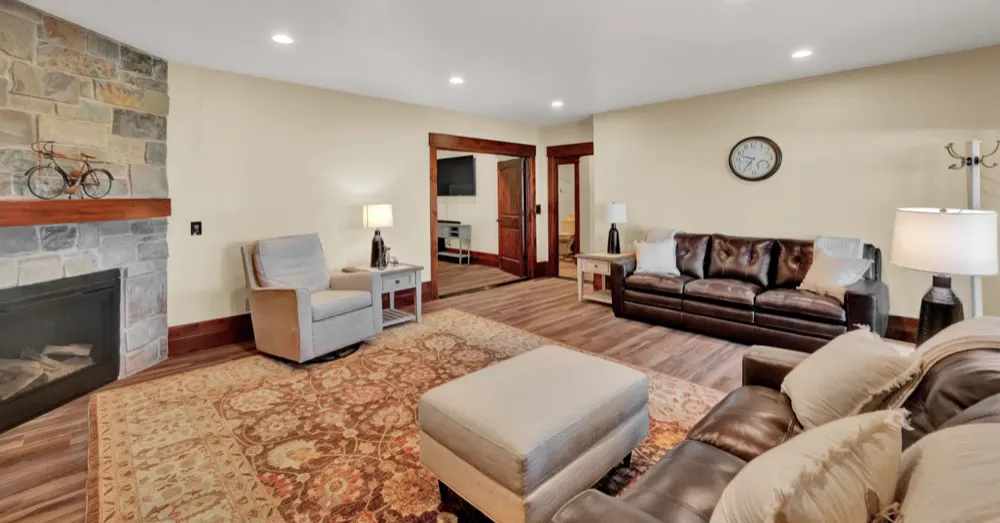
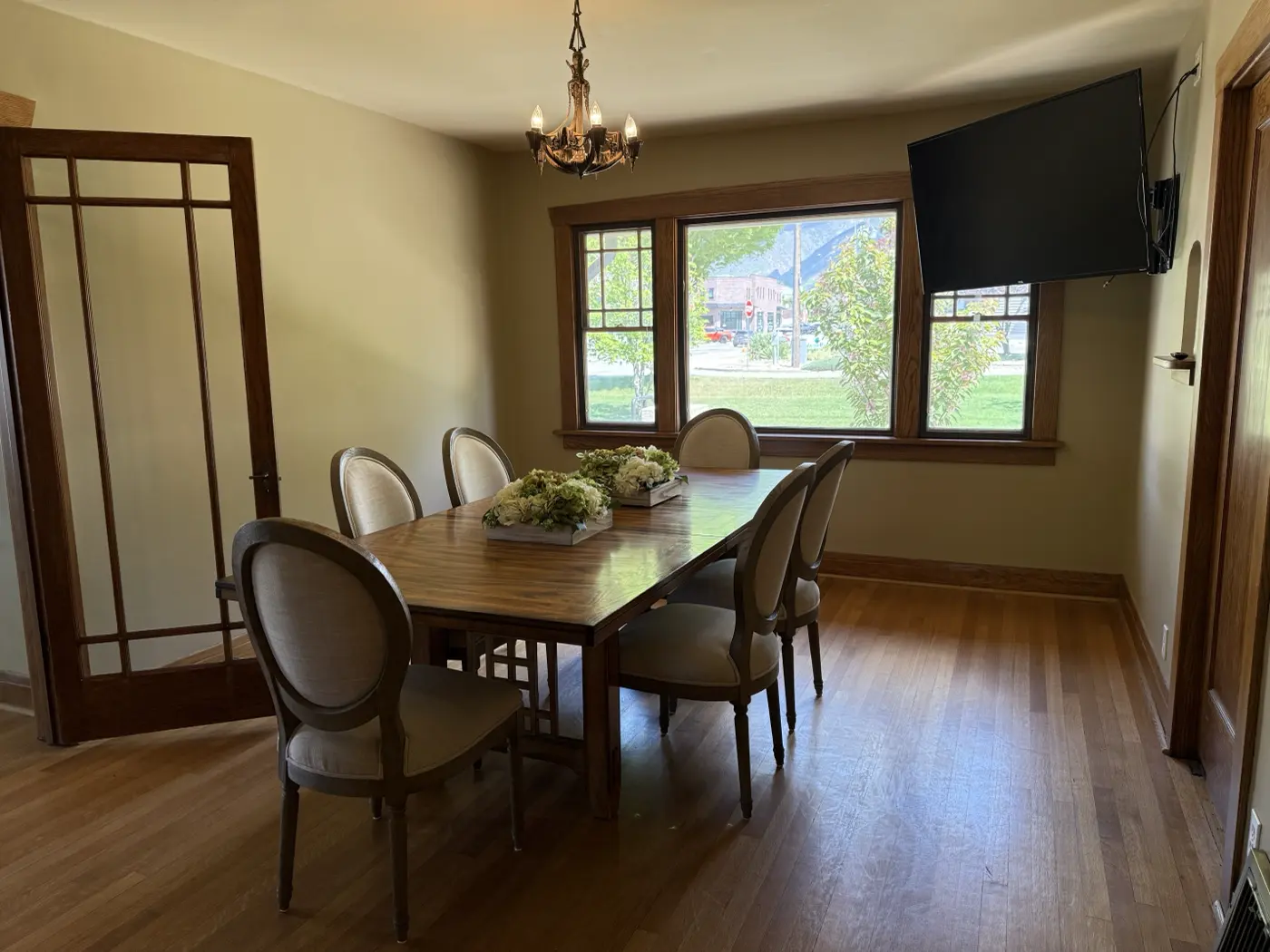
Voluntary, unlocked houses with staff on site around the clock, so you have support between sessions.
Full assessment at intake
Medical, psychiatric and psychological assessment shapes when and how processing work fits your plan.
One campus for every step
Residential, then PHP, then IOP in Draper, with the same team as you step down.
Time to heal
Your clinical team sets the length of your stay, leaving time to work through trauma at a safe pace.
What a brainspotting session looks like
Brainspotting is largely self-directed, with the therapist as your guide. The pointer finds the spot; your own attention does the processing.
Settle
Before any processing- 1Ground and choose a focus
Slow breathing, sometimes with music or bilateral sound, then the issue you want to work on.
- 2Notice the body
Where you feel it most, and how strong it is on a scale from 0 to 10.
Find and process
Where the brainspot is used- 3Find the brainspot
Your therapist guides your eyes with a pointer to the position where the body response is strongest.
- 4Hold and notice
You keep your gaze there and notice thoughts, feelings and sensations as they come and go.
Close
Every session ends steady- 5Return to calm
You check the body again and use your grounding skills before the session ends.
Bilateral sound, music that moves between the left and right ear, is often used to help the nervous system stay calm while you process. Emotions and body sensations can keep shifting for a while after a session, which is why support between sessions matters.
How brainspotting helps with trauma
Trauma can be hard to resolve through talking alone, and left untreated it can feed into PTSD, depression and anxiety. Brainspotting works on the experience as the body holds it, inside a steady relationship with a trained therapist.
- Less retelling
The work happens through attention and the body, so you don’t have to describe every detail of what happened.
- Body and memory together
It works with the body’s response (tension, numbness, a racing heart) as well as the memory.
- Contained and supported
Your therapist stays attuned the whole session and keeps the pace one you can manage.
- Paced with stabilization
For complex trauma and dissociation, grounding skills come first and processing is slower.
Brainspotting for PTSD, anxiety and depression
Brainspotting was first developed for PTSD. It’s also used when other conditions are tied to trauma or show up strongly in the body, always as one part of a wider plan.
Brainspotting for PTSD
Brainspotting was developed for trauma, and its best-known study compared it with EMDR for PTSD symptoms after a traumatic event. Here it can be one part of trauma and PTSD treatment.
Brainspotting for anxiety
When anxiety shows up in the body, such as a racing heart or tight chest, some clients use brainspotting to work with it. Read brainspotting for anxiety.
Brainspotting for depression
Many people with depression also carry trauma. Body-based methods like brainspotting can work on that part, alongside the rest of your depression treatment.
Alongside substance use
When trauma and substance use are linked, brainspotting can be part of co-occurring disorders care, once you’re sober and stable.
Brainspotting or EMDR?
They’re related: brainspotting grew out of EMDR. Your therapist chooses with you and can switch. EMDR and internal family systems are our main trauma methods, and brainspotting is used when it fits you better. Learn about evidence-based therapies for trauma.
Brainspotting
Uses one fixed eye position, found with a pointer, and focuses on how emotion and the body’s response are linked. Less structured, and it relies less on retelling, which can suit people who find talking about trauma hard.
EMDR
Uses side-to-side eye movements or other bilateral stimulation within an eight-phase protocol, and has the strongest research base for PTSD. Learn about EMDR therapy in Utah.
Who provides brainspotting here
Brainspotting is one-on-one, in individual therapy, with therapists on our team who are trained in it. Whether it’s part of your plan depends on your therapist and on what fits you, decided together. Between sessions you have staff on site and daily groups. Learn about our residential treatment.
ResidentialWith staff on site around the clock between sessions
Two individual sessions a week
PHPPlus full therapy days and groups
One individual session a week
IOPPlus morning groups three or five days a week
Individual therapy every other week
Thank you, we have your details
Admissions will call you to go over your coverage, usually the same business day. If it’s urgent, call (801) 383-0810.
Paying for treatment
Brainspotting is part of your program, so it’s covered when your program is. We work with most PPO plans that include out-of-network benefits, and with self-pay. Our team will verify your insurance for free.
PPO plans with out-of-network benefitsUsually covered
Self-payPayment options
Single case agreementsAsk admissions
Read about cost and payment options.
Thank you, we have your details
Admissions will call you to go over your coverage, usually the same business day. If it’s urgent, call (801) 383-0810.















In our clients’ words
Three mental health facilities in Draper, Utah
Clients come to us from across Utah and the country. Admissions helps you plan your arrival.

Questions about brainspotting
Have another question? Our admissions team takes calls at any hour; after hours, we call you back from 9 a.m. MT.
Call (801) 383-0810What happens in a brainspotting session?
The therapist guides your gaze to a fixed point linked to a strong body response, and you notice what comes up while the therapist stays attuned. Sessions start and end with grounding, so you leave steady.
Is brainspotting evidence-based?
Research is still early compared with EMDR. In a 2017 study of 76 adults after a traumatic event, PTSD symptoms dropped with both brainspotting and EMDR, with larger effects for EMDR. Brainspotting isn’t yet in the major PTSD treatment guidelines. Here it’s used alongside established therapies such as EMDR.
Can brainspotting help with anxiety?
Some clients use it for anxiety, especially when it shows up in the body. See our post on brainspotting for anxiety.
Can it help with depression?
When depression is linked to trauma, brainspotting can be one part of the plan, alongside therapy, groups and psychiatric care.
Can I come to Corner Canyon only for brainspotting?
Brainspotting is part of residential, PHP or IOP care, in individual therapy with a therapist trained in it. Learn about our residential treatment.
Do I have to talk about my trauma in detail?
Not necessarily. Brainspotting relies less on detailed retelling than some talk therapies.
Who should not do brainspotting?
Processing work can bring up strong feelings, so it isn’t the first step for everyone. If you dissociate often or are in crisis, your therapist builds stabilization skills first, or uses a different method. A licensed therapist decides with you whether it fits.
Does insurance cover brainspotting?
Brainspotting is part of your program, so it’s covered when your program is. We work with many PPO plans, including Aetna, Cigna, UnitedHealthcare and Blue Cross Blue Shield plans, through out-of-network benefits, depending on your plan, and with self-pay. Our team will verify your insurance for free.
Talk to someone today
Want to know whether brainspotting could be part of your plan? Our admissions team takes calls at any hour; after hours, we call you back from 9 a.m. MT.