
















Despite sharing many symptoms, a manic episode and hypomania have important differences, particularly in their intensity, length, and impact. Mania is severe and disrupts daily life. Hypomania is milder and shorter. It’s very important to obtain a correct diagnosis, as the right treatment for bipolar disorder is essential. This can be aided by knowing their differences [1].
What Is a Manic Episode?
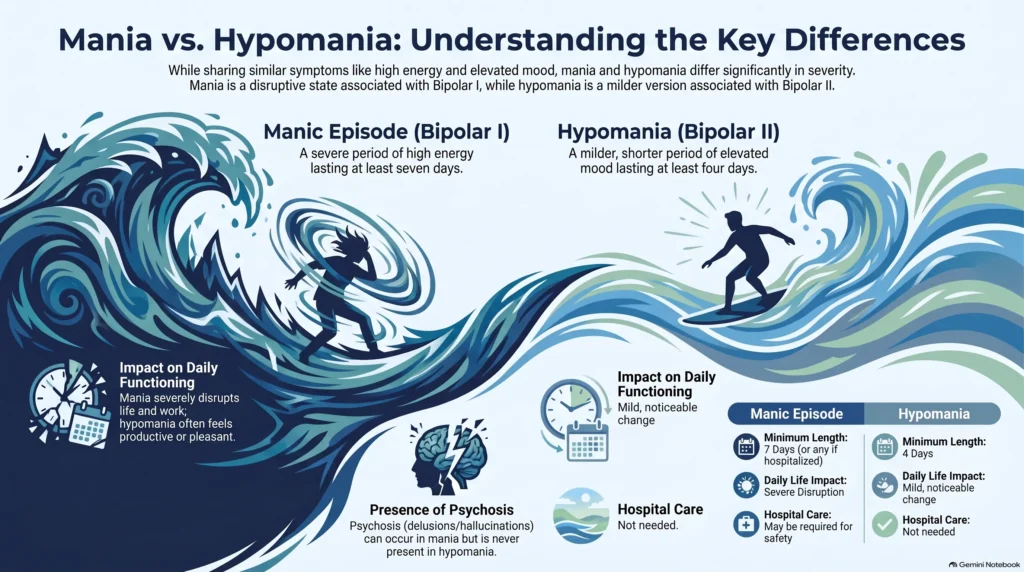
A manic episode is a marked period of high energy with an unusually elevated, expansive, or irritable mood that lasts at least seven days. This change in mood is severe, disrupting work life, personal and professional relationships, and self-care. Some people need hospitalization to stay safe.
A manic episode can also bring psychosis, such as delusions or hallucinations [2]. If symptoms are severe enough to require hospitalization, the episode counts as mania even when it lasts less than a week [2].
A single manic episode is enough to diagnose bipolar I disorder [3]. For example, a person in a manic episode might stay awake for three days, spend their savings on a sudden business idea, and believe they have special powers.
Friends and family often notice the change before the person does. Manic episodes tend to build over days rather than appearing all at once. Without treatment, they can last weeks and cause lasting harm at work, in relationships, or with money [2].
What is Hypomania?
A milder, shorter version of mania, hypomania typically lasts at least four days. Normally it does not cause major workplace problems or disruptions in home life. Psychosis is not present, and no hospital care is needed [3]. Many people find hypomania pleasant. They feel productive, confident, and full of energy, so they often do not seek help during these periods [4].
For example, someone with hypomania might sleep only five hours, feel unusually social and creative, finish projects fast, and still make it to work each day. Hypomania paired with depression points to bipolar II disorder [3]. Even so, hypomania is a warning sign, not just a good period. It shows the brain can swing into elevated states, and a depressive crash often follows [4].
How Is a Manic Episode Different from Hypomania?
Both states cause the same symptoms. They differ in how long they last, how much they disrupt life, and whether psychosis appears.
| Feature | Manic episode | Hypomania |
|---|---|---|
| Minimum length | 7 days, or any length if hospitalized | 4 days |
| Effect on daily life | Severe disruption | Mild, noticeable change |
| Hospital care | May be needed | Not needed |
| Psychosis | Possible | Never present |
| Linked diagnosis | Bipolar I disorder | Bipolar II disorder |
The hospitalization rule is key. A short but dangerous episode that lands someone in the hospital is mania, not hypomania [2].
What Signs Do Mania and Hypomania Share?
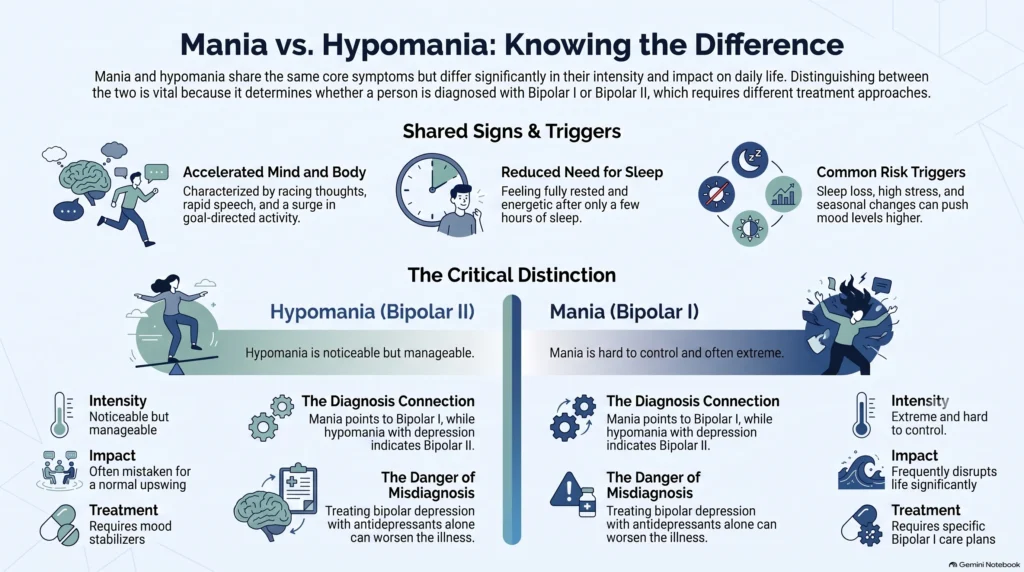
Mania and hypomania cause the same core symptoms, but they differ in strength and duration. Common signs include:
- Inflated self-esteem or grandiosity
- A reduced need for sleep, such as feeling rested after only a few hours
- Being more talkative than usual or feeling pressure to keep talking
- Racing thoughts or quickly jumping between ideas
- Being easily distracted
- A surge in goal-directed activity or restlessness
- Risky behavior, such as overspending, reckless driving, or impulsive decisions
In mania, these signs are hard to control and can be extreme. In hypomania, they are noticeable but still manageable [5]. The same person can have full manic episodes at some times and hypomanic episodes at others, so tracking your patterns over time is useful.
What Can Trigger a Manic or Hypomanic Episode?
Episodes do not always have a clear cause. Still, some patterns raise the risk. Common triggers include:
- Losing sleep or big changes to your sleep schedule
- High stress or major life changes, such as a new job or a loss
- Alcohol or drug use
- Starting an antidepressant without a mood stabilizer
- Seasonal shifts in light and daily routine
You and your care team can better plan ahead and take action early if you know your signs [3].
Can Hypomania Turn Into Mania?
Because hypomania and mania are related but separate states, knowing the difference between them is important. In bipolar I disorder, elevated mood can escalate into full mania. In bipolar II disorder, symptoms stay at the hypomanic level and never reach mania [3].
Lost sleep, high stress, or certain medications can push mood higher, so treating early signs matters [2]. If a hypomanic period starts to disrupt your life or bring on unusual thoughts, treat it as a medical concern.
Why Does Telling Mania and Hypomania Apart Matter?
The distinction shapes your diagnosis and treatment. Mania points to bipolar I disorder. Hypomania with depression points to bipolar II disorder [3]. The two conditions can need different care plans.
Because hypomania often feels good, it is easy to mistake for a normal upswing. When depression follows, the illness is often misdiagnosed as major depression [4]. That mistake matters.
Treating bipolar depression with antidepressants alone can worsen the illness [4]. An accurate diagnosis helps your care team choose safer, more effective treatment. Getting the label right early can prevent needless setbacks.
When Should You Get Help for Manic or Hypomanic Symptoms?
Reach out if elevated mood, high energy, or reduced sleep lasts several days or disrupts your life. Hypomania is easy to miss, and untreated bipolar disorder can take years to diagnose correctly [5].
Track your mood changes and share them with a clinician. A clinician may ask about your sleep, energy, spending, and mood over recent weeks, so a simple mood diary makes these talks easier and more accurate.
Early, accurate diagnosis leads to better treatment and fewer episodes over time [5]. If you or someone you love feels unsafe or out of control, contact a mental health professional or a crisis line right away.
Trauma-focused Treatment in Salt Lake County
Treatment for mental health conditions and trauma is available in Utah, in a peaceful setting bordered by the beautiful Wasatch Mountains. Are you or a loved one looking for a compassionate space to heal from OCD, anxiety, trauma, PTSD, C-PTSD, other mental health conditions, or addictions? Corner Canyon accepts Select Health insurance billed as out-of-network.
Our licensed trauma-informed therapists and counselors at Corner Canyon Health Centers provide knowledgeable, empathic help using a range of therapeutic and holistic techniques. We also offer ketamine-assisted psychotherapy for treatment-resistant depression.
Reach out to our admissions team at Corner Canyon now.

Sources
| [1] | National Institute of Mental Health. (n.d.). Bipolar disorder. U.S. Department of Health and Human Services, National Institutes of Health. |
| [2] | Dailey, M. W., & Saadabadi, A. (2023). Mania. In StatPearls. StatPearls Publishing. |
| [3] | Jain, A., & Mitra, P. (2023). Bipolar disorder. In StatPearls. StatPearls Publishing. |
| [4] | Berk, M., et al. (2025). Bipolar II disorder: A state-of-the-art review. World Psychiatry. |
| [5] | Oliva, V., et al. (2024). Bipolar disorders: An update on critical aspects. The Lancet Regional Health – Europe. |