
















A mental health assessment is not a test, and there are no wrong answers. It is simply how a clinical team gathers the information needed to build a treatment plan around the person in front of them, not a generic template. Here is what that process actually looks like at Corner Canyon Health Centers, from the first conversation to the plan that comes after it.
What Is a Mental Health Assessment, and Why Does It Come First?
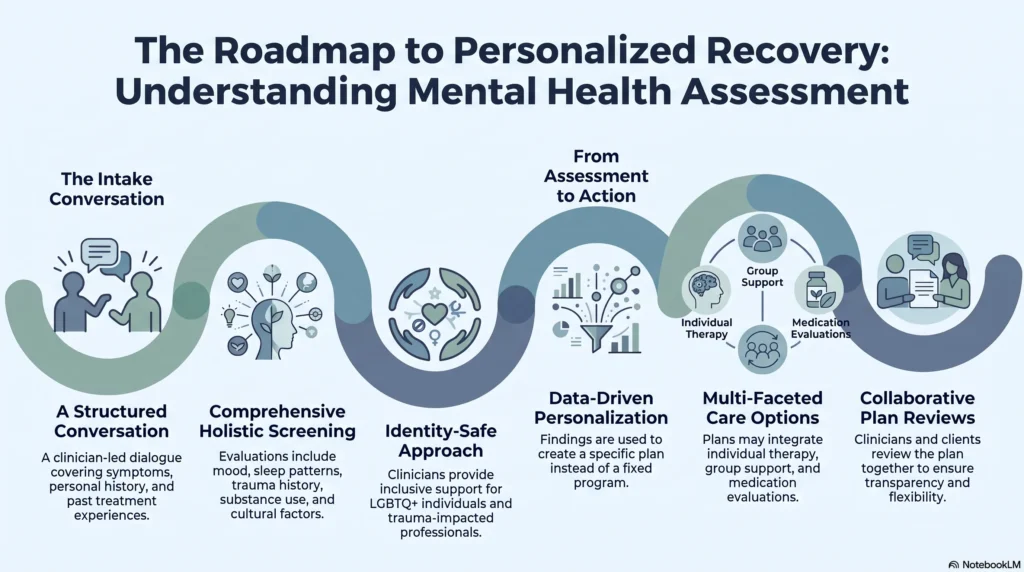
A mental health assessment, sometimes called an intake or clinical evaluation, is a structured conversation between a client and a clinician that covers current symptoms, personal and family history, and any past treatment.
The American Psychiatric Association’s practice guidelines for evaluating adults describe this process as covering several core areas, including psychiatric symptoms, trauma history, substance use, risk to self or others, medical health, and cultural factors that shape how a person experiences care [1].
Every one of those areas matters because a treatment plan built without them is really just a guess. The assessment comes first because it is what makes the rest of treatment specific instead of generic.
What Actually Happens During an Intake at Corner Canyon?
Intake at Corner Canyon starts with a conversation, not a checklist read aloud. A clinician asks about what brought a person in, how long symptoms have been present, and how they show up in daily life.
From there, the conversation moves into personal history, including family background, prior treatment, and anything that feels relevant to why someone is seeking help now. For LGBTQ+ clients, Corner Canyon staff are trained to ask questions in a way that does not require a client to explain or justify their identity before getting to the actual clinical conversation.
What Topics Does the Assessment Cover?
A complete assessment covers more ground than most people expect. Clinicians ask about current mood and thought patterns, sleep and appetite, substance use, and any history of trauma, since these areas are directly tied to accurate diagnosis and safe treatment planning [1].
Co-occurring substance use is asked about specifically rather than assumed, since integrated screening for both mental health and substance use concerns is part of building an accurate, complete picture from day one [2].
Family history and prior treatment are also part of the conversation, since knowing what has or has not worked before shapes what gets recommended next. None of these questions are asked to judge a person; they are asked because the answers directly shape the plan that follows.
How Long Does the Process Take?
An initial assessment is not a five-minute form. It typically takes longer than a routine follow-up appointment because there is more to cover, and rushing it usually means missing something important later.
At Corner Canyon, intake is scheduled with enough time built in so that a clinician is not working against the clock while trying to understand someone’s full history. Clients are never expected to summarize their entire life in a few rushed minutes.
What Happens After the Assessment Is Complete?
Once the assessment is finished, the clinical team uses everything gathered to build a specific, individualized treatment plan rather than placing a client into a fixed program.
That might mean individual therapy, group support, medication evaluation, or some combination, depending on what the assessment actually showed. The plan is reviewed with the client directly, so nothing about it is a surprise, and it can be adjusted as treatment progresses and more is understood about what is and is not working.
What Makes Corner Canyon’s Intake Different?
Corner Canyon built its intake process around a simple idea: no two people arrive with the same story, so the first appointment should not treat them like they do.
Clinicians are trained to understand the specific realities different clients bring, whether that is a young adult in early independence, a parent balancing treatment with family, a professional or first responder carrying job-related stress and trauma, or an LGBTQ+ client dealing with identity-related stress or family rejection.
Staff at every level, not just clinicians, are trained to make intake feel safe rather than clinical or cold. That difference is often what separates someone who completes treatment from someone who walks away after a single appointment. Contact our admissions team today to talk through what to expect and begin your recovery journey.
Frequently Asked Questions
How long does a mental health assessment at Corner Canyon take?
Most initial assessments take longer than a typical follow-up appointment, since there is more history and information to cover. Corner Canyon schedules intake with enough time built in so the conversation is not rushed.
Do I need to prepare anything before my assessment?
No specific preparation is required. It can help to think through what has been going on recently and any past treatment or medications, but clients are never expected to arrive with a polished summary.
Will what I share during the assessment stay private?
Yes. Information shared during intake is protected and is not shared outside the clinical team without the client’s consent, consistent with standard confidentiality protections in mental health care.
What if the assessment shows I need a higher level of care than expected?
That is exactly what the assessment is designed to catch early. If a higher level of care is recommended, the clinical team explains why and walks through the options directly with the client before anything changes.
Can a family member be involved in the intake process?
It depends on what the client wants. Some clients prefer to complete the assessment on their own, while others want a parent or family member involved, especially early on. Corner Canyon works with each client’s preference rather than a fixed rule.

Sources
| [1] | American Psychiatric Association. 2015. Practice Guidelines for the Psychiatric Evaluationof Adults, Third Edition |
| [2] | Substance Abuse and Mental Health Services Administration. 2021.Substance Use Disorder Treatment for People With Co-Occurring Disorders. |